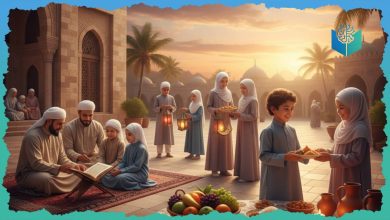
Islam, a major monotheistic religion, stands as a vibrant global force, shaping the lives of nearly two billion people worldwide. Its rich history, profound teachings, and diverse cultural expressions offer a compelling subject for exploration. This guide aims to provide a comprehensive about Islam, delving into its core principles, foundational practices, historical journey, and the cultural tapestry it has woven across continents.
For readers seeking a structured overview, many introductory resources highlight 10 facts about Islam that summarize its essence, including belief in one God, daily prayer, charity, fasting, pilgrimage, moral accountability, community responsibility, knowledge-seeking, compassion, and justice. These points collectively reflect the balance between faith and action that defines Islamic life.
What is Islam? Understanding the Core Principles
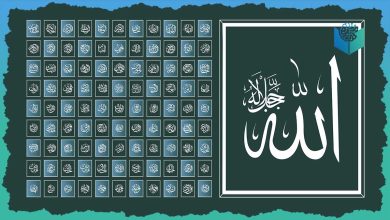
At its core, Islam is about surrendering to the will of God. Muslims, who follow Islam, believe in a single, unmatched deity called Allah, the Arabic term for God. Central to their faith is the belief in God’s absolute oneness, a principle known as Tawhid, which forms the foundation of Islamic theology.
These foundational Islam beliefs shape every aspect of a Muslim’s worldview, emphasizing accountability, purpose, and ethical responsibility. Faith in Islam is not abstract; it is meant to guide thought, behavior, and intention in everyday life.
Muslims believe that Allah has communicated His divine guidance through a series of prophets throughout history, including Adam, Noah, Abraham, Moses, Jesus, and finally, the Prophet Muhammad (peace be upon them all). Prophet Muhammad, considered the last prophet, received revelations from God, which were compiled into the Holy Quran. The Quran is regarded by Muslims as the literal word of God, serving as the ultimate source of divine law and moral guidance. Alongside the Quran, the Sunnah (the teachings, sayings, and practices of the Prophet Muhammad, documented in Hadith) provides further guidance on how to live an Islamic life.
Together, the Quran and Sunnah form the foundation of Islam beliefs and practices, ensuring that faith is expressed through worship, ethics, social responsibility, and personal conduct.
The Five Pillars of Islam
The practical structure of Islamic worship is built on five essential acts, known as the Five Pillars of Islam. These pillars form the core of a Muslim’s devotion and spiritual growth within Islam:
Shahada (Declaration of Faith): The affirmation that “there is no god but Allah, and Muhammad is His messenger.” This simple yet profound declaration is the gateway to becoming a Muslim.
Salat (Prayer): Muslims perform five daily prayers at specific times: dawn, noon, mid-afternoon, sunset, and night. These prayers involve a series of physical movements and recitations, facing the Kaaba in Mecca, symbolizing unity and devotion.
Zakat (Charity): An obligatory annual charitable contribution, typically 2.5% of one’s accumulated wealth, paid to the poor and needy. It is a purification of wealth and a recognition of social responsibility.
Sawm (Fasting during Ramadan): Muslims abstain from food, drink, and other physical needs from dawn to sunset during the holy month of Ramadan. This pillar promotes self-discipline, empathy for the less fortunate, and spiritual reflection.
Hajj (Pilgrimage to Mecca): For every Muslim who is physically and financially able, Hajj – the pilgrimage to Mecca is a mandatory, once-in-a-lifetime spiritual journey. It’s a deeply profound act of worship that unites Muslims globally, creating a powerful display of shared faith, devotion, and solidarity.
These pillars serve as a practical demonstration of Islam beliefs and practices, translating inner faith into consistent action throughout a Muslim’s life.
The Symbol of Islam: Exploring the Crescent Moon and Star
When people think of the Islam symbol, the crescent moon and star often come to mind. However, it’s important to note that this symbol is not an ancient or universally recognized religious symbol of Islam. It predates Islam and was adopted by the Ottoman Empire, which later popularized its association with the faith. Today, it is widely used on the flags of many Muslim-majority countries and by various Islamic organizations, representing a modern cultural identifier rather than a divinely ordained emblem.
Other important Islamic visual elements include intricate geometric patterns, Arabic calligraphy (especially of Quranic verses), and the minaret in mosque architecture, all of which emphasize spirituality without physical representation of the divine.
A Journey Through Time: The Rich History of Islam
The story of Islam began in the 7th century CE in the Arabian Peninsula with the divine revelations received by the Prophet Muhammad in the city of Mecca. Prior to the advent of Islam, the region was predominantly polytheistic, inhabited by various tribes and bustling with trade routes.
Understanding Islam religion history of Islam provides essential insight into how faith, governance, culture, and scholarship developed together within Islamic civilization.
- The Prophetic Era (610–632 CE): Prophet Muhammad received his first revelation in 610 CE. Due to rising opposition in Mecca, he migrated to Medina in 622 CE, an event that marks the beginning of the Islamic calendar (Hijra). In Medina, he founded the first Muslim community, establishing the roots of an Islamic society.
- The Rashidun Caliphate (632–661 CE): After the Prophet’s death, leadership passed to the first four “Rightly Guided Caliphs” Abu Bakr, Umar, Uthman, and Ali. Under their guidance, Islam expanded swiftly across the Middle East, North Africa, and Central Asia, laying the groundwork for a vast Islamic realm.
- The Umayyad Caliphate (661–750 CE): The Umayyads pushed the frontiers of the Islamic empire to their furthest extent, reaching as far west as Spain and as far east as India. They introduced centralized governance and made lasting contributions to Arabic culture, architecture, and administration.
- The Abbasid Caliphate (750–1258 CE): Often referred to as the “Islamic Golden Age,” this period, with Baghdad as its heart, was distinguished by remarkable achievements in knowledge and science. Muslim scholars preserved, translated, and expanded upon the works of Greek, Roman, and Persian civilizations, making groundbreaking contributions to medicine, mathematics, astronomy, and philosophy.
- Later Empires and Global Expansion: Following the fall of the Abbasids, influential Islamic empires emerged, including the Ottoman Empire, the Safavids in Persia, and the Mughals in India. Islam also spread to Southeast Asia and Africa via trade and scholarship.
A frequently asked comparative question is how old is Islam and Christianity. Christianity originated in the 1st century CE, while Islam began in the 7th century CE. Despite the difference in historical timelines, both faiths emphasize belief in one God and moral accountability.
Islamic Values and Ethical Framework
Beyond its pillars and historical narrative, Islam presents a comprehensive ethical framework for life. Core Islamic values emphasize:
Justice (Adl): Upholding fairness and equity in all dealings, personal and societal.
Compassion and Mercy (Rahmah): Encouraging kindness, forgiveness, and empathy towards all creation.
Knowledge Seeking (Ilm): Islam places a high premium on education and intellectual pursuit.
Community (Ummah): Fostering a strong sense of brotherhood and solidarity among Muslims worldwide.
Family Values: Emphasizing strong family ties and respect for elders.
Environmental Stewardship (Khalifa): Recognizing humanity’s responsibility toward the Earth.
These values ensure that Islam beliefs are lived ethically and practically, not limited to ritual worship alone.
Exploring Diverse Islamic Cultures and Traditions
The vast geographical spread and rich history of Islam have given rise to an incredible diversity in Islamic cultures. From mosque architecture to poetry, calligraphy, and festivals, Islam has adapted across regions while maintaining spiritual unity.
Common Misconceptions About Islam
Despite its global presence, misconceptions about Islam remain widespread. Many misunderstandings stem from a lack of awareness of authentic Islam beliefs and practices, which prioritize peace, dignity, and justice. The vast majority of Muslims reject extremism as incompatible with Islamic teachings.
Conclusion
In conclusion, Islam is a dynamic faith with profound spiritual depth, a rich historical legacy, and a vibrant global community. Understanding Islam requires appreciating both belief and action, history and ethics, spirituality and society.
Q&A: Some of the Most Frequently Asked Questions About Islam
What are 5 facts about Islam?
Islam teaches belief in one God, follows the Quran, practices five daily prayers, emphasizes charity, and promotes moral accountability.
What are 10 facts about Islam?
Islam is monotheistic, values prayer and charity, promotes justice and compassion, encourages knowledge, builds community, and emphasizes accountability in the afterlife.
How old is Islam and Christianity?
Christianity began in the 1st century CE, while Islam began in the 7th century CE, both tracing roots to earlier prophets.
Reliable Sources
These are credible, well-known, academically trusted sources:
- The Holy Quran (English translation – Quran.com)
https://quran.com - Britannica – Islam
https://www.britannica.com/topic/Islam - UNESCO – Islamic History & Culture
https://www.unesco.org